How to Get Your Driver's License in Nova Scotia: Step-by-Step (2026)
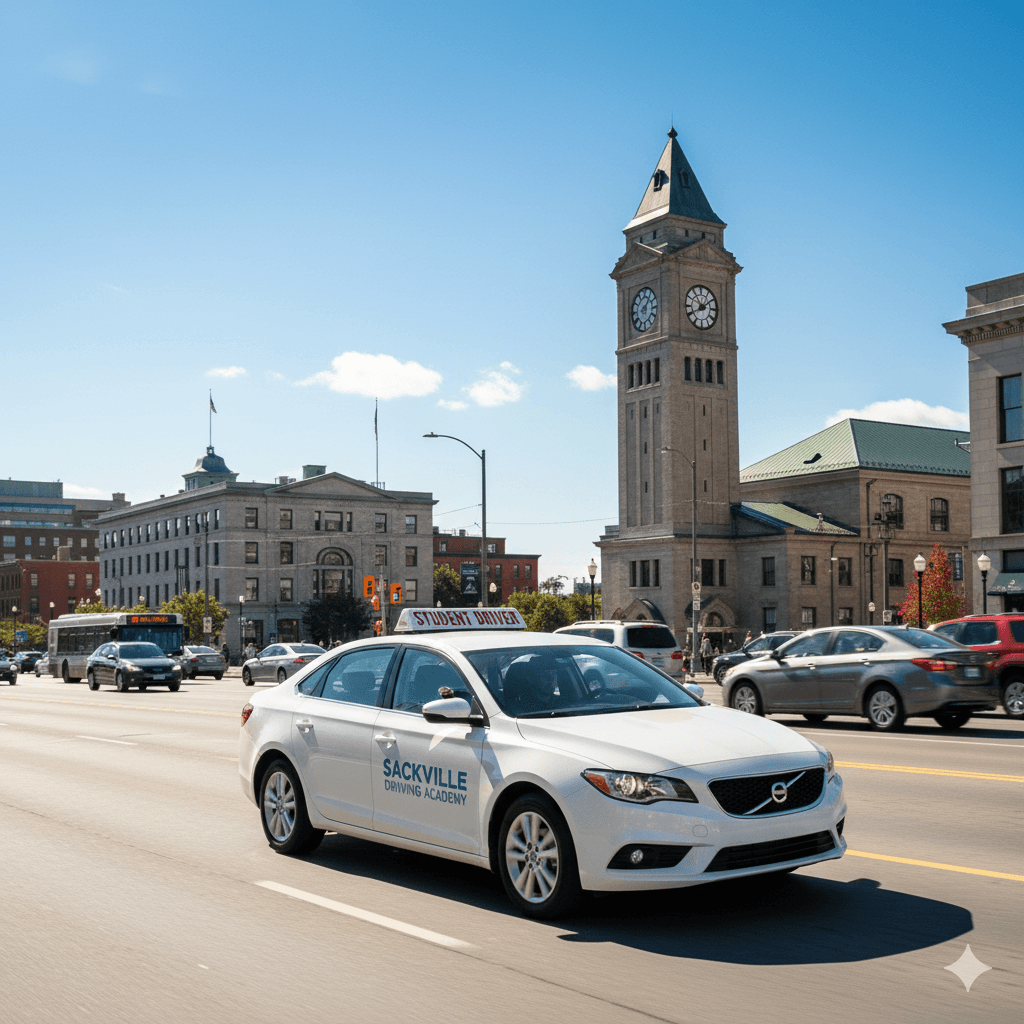
Complete Guide to Getting Your Driver's License in Nova Scotia (2026)
Getting your driver's license is one of life's major milestones. In Nova Scotia, the process follows a structured Graduated Driver Licensing (GDL) system designed to build your skills progressively while minimizing risk.
Whether you're a teenager eager for independence, a newcomer to Canada, or an adult learning to drive for the first time, this comprehensive guide walks you through every step—from your first written test to holding a full Class 5 license.
We'll cover eligibility requirements, the three GDL stages, costs, timelines, the benefits of driver's education, and strategic tips to save time and money.
Overview: The Nova Scotia GDL System
Nova Scotia uses a Graduated Driver Licensing (GDL) program that phases new drivers through three stages:
- Class 7 (Learner's License) - Supervised driving only
- Class 5N (Newly Licensed) - Independent driving with restrictions
- Class 5R/5 (Restricted/Full License) - Full driving privileges
Each stage has specific requirements, restrictions, and waiting periods. The entire process typically takes 2-3 years minimum, but can be shortened by completing approved driver education.
Stage 1: Getting Your Learner's License (Class 7)
The first step is obtaining your Learner's License, which allows you to practice driving under supervision.
Eligibility Requirements
Age: Minimum 16 years old
Required documents:
- Proof of identity (birth certificate, passport, permanent resident card)
- Proof of Nova Scotia residency (utility bill, bank statement, signed lease)
- Signed parental consent if under 19
The Written Knowledge Test
Before getting your learner's permit, you must pass a written test covering traffic laws, signs, and safe driving practices.
Test format:
- 20 multiple-choice questions
- 16 correct answers required to pass (80%)
- Topics: road signs, right-of-way, speed limits, safe driving
How to prepare:
-
Study the Driver's Handbook - The official source for all test questions
-
Take practice tests - Our free online quiz helps you prepare: Free Nova Scotia Practice Driving Test
-
Focus on common topics:
- Traffic sign meanings
- Right-of-way rules
- Speed limits in various zones
- Following distance (2-second rule)
- School zone regulations
For comprehensive practice test strategies, see our Nova Scotia Practice Driving Test Guide.
Taking the Test
Where: Any Access Nova Scotia location (Halifax, Dartmouth, Sackville, etc.)
Cost: Approximately $20 (check current fees at Access NS)
What to bring:
- Required identification documents
- Payment (debit, credit, or cash)
- Glasses/contacts if you require vision correction
The vision test: You'll also complete a basic vision screening to ensure you meet minimum visual acuity standards.
After Passing: Your Class 7 License
Once you pass the written and vision tests, you receive your Class 7 Learner's License.
What you can do:
- Practice driving with a qualified supervisor
- Learn essential driving skills in real-world conditions
- Gain experience on different road types
Restrictions:
- Must have a supervisor in the front passenger seat at all times
- Supervisor must hold a valid Class 5 (or higher) license for at least 2 years and not be in the GDL program
- Zero alcohol tolerance (0.00% BAC)
- Cannot drive on 100-series highways unless with an approved instructor
Minimum holding period:
- 12 months by default before you can take the road test
- 9 months if you complete an approved Driver Education course (major advantage)
The Driver's Education Shortcut
Here's where strategy matters. Completing a government-approved 35-hour Beginning Driver Education (BDE) course provides three massive benefits:
Benefit 1: Faster Road Test Eligibility
Without driver's ed: 12-month wait With driver's ed: 9-month wait
That's 3 months saved—getting your freedom sooner.
Benefit 2: Insurance Discounts
Most insurance companies in Nova Scotia offer significant discounts (typically 10-25%) for drivers who complete certified driver's education.
The math:
- Average teen insurance: $2,000-$3,000/year
- Typical discount: 15%
- Annual savings: $300-$450
- Total savings over 3 years: $900-$1,350
For many families, the course pays for itself through insurance savings alone.
Benefit 3: Better Preparation
Professional instruction teaches:
- Proper techniques that parents often skip
- Current rules and regulations
- Defensive driving strategies
- Highway merging and complex maneuvers
- Test-specific skills
What's included in a 35-hour BDE course:
- 25 hours of classroom/online theory
- 10 hours of one-on-one in-car instruction
- Use of driving school vehicle for road test
- Certificate recognized by insurance companies
Cost: Typically $800-$1,100 depending on provider
Learn about our Driver's Education packages
Is Driver's Ed Worth It?
Short answer: Yes, for most people.
The combination of time savings (3 months), insurance discounts ($900+ over 3 years), and better preparation makes it a smart investment.
For a detailed ROI analysis, see our article: Why Driver's Education is Worth the Investment.
Stage 2: The Road Test (Getting Your Class 5N)
After holding your Class 7 license for the required period (9 or 12 months), you're eligible to take the practical road test.
Preparing for the Road Test
Practice requirements: While there's no official minimum practice hours, we recommend:
- 50+ hours of supervised driving
- Mix of day/night, highway/city, and various weather conditions
- Focused practice on weak areas (parking, merging, etc.)
Key skills examiners evaluate:
- Observation - Mirror checks, shoulder checks, scanning intersections
- Speed control - Matching limits, adjusting for conditions
- Space management - Following distance, lane positioning
- Right-of-way - Knowing who goes first
- Signaling - Proper timing and usage
- Parking - Reverse parking, roadside parking
Choosing Your Test Location
In the Halifax region, you have three main options:
Halifax (Mount Hope):
- Higher traffic density
- 100-series highway merging
- Complex urban intersections
- Best for confident city drivers
Sackville:
- More residential routes
- Calmer environment
- Highway 101 (easier than 100-series)
- Often recommended for first-time testers
Dartmouth (Baker Drive):
- Moderate difficulty
- Multiple rotaries
- Highway 111 component
- Good for Dartmouth residents
For detailed location comparisons, see our guides:
- Halifax Road Test: Routes, Tips & Everything You Need to Know
- Halifax vs. Sackville Road Test Comparison
- Sackville Road Test Route Walkthrough
Booking Your Road Test
How to book:
- Online at Access Nova Scotia website
- By phone: 1-800-898-7668
- In person at any Access NS location
Wait times: Can be 4-8 weeks during busy seasons (summer), so book early
Cost: Approximately $30-40 (check current fees)
Test Day Requirements
What to bring:
- Current Class 7 license
- Payment for test fee
- Vehicle with valid insurance and registration
- Proof of driver's education completion (if applicable)
Vehicle requirements (if using your own car):
- All lights functioning (brake, signals, headlights)
- Valid inspection sticker
- Clean windshield and mirrors
- No dashboard warning lights
- Proper tire condition
💡 Tip: Many students use a driving school vehicle for the test to avoid vehicle inspection failures. One burnt-out brake light means automatic test cancellation.
What Happens During the Test
Duration: 20-30 minutes
Route components:
- Residential driving
- Commercial/multi-lane roads
- Highway merging (usually)
- Parking maneuvers (reverse parking, roadside parking)
- Intersection navigation
Automatic failures:
- Running a stop sign or red light
- Speeding in a school zone
- Hitting a curb or object
- Not yielding to pedestrians
- Dangerous actions
Common mistakes:
- Rolling stops
- Missing shoulder checks
- Following too closely
- Wrong lane selection
- Late signaling
For comprehensive test tips, read our Halifax Road Test Guide.
After Passing: Your Class 5N License
Congratulations! You now have your Class 5N (Newly Licensed) driver's license.
New privileges:
- Drive independently without supervision
- Use 100-series highways
- Drive anywhere in Nova Scotia
Remaining restrictions:
- Zero alcohol tolerance (0.00% BAC)
- No driving between midnight and 5 AM (except work/school with exemption)
- Must display "N" on rear of vehicle (some jurisdictions)
Minimum holding period: 2 years before advancing to Class 5R
Stage 3: Graduating to Full Class 5
After holding your Class 5N license for at least 2 years, you can advance to full Class 5 privileges (removing midnight-5 AM restriction and zero tolerance).
Path to Class 5R/5
If you completed the 35-hour BDE course originally:
- You automatically advance to Class 5 after the 2-year waiting period
- No additional course or test required
- Simply apply for license upgrade at Access NS
If you did NOT complete BDE:
- You must complete a Defensive Driving course to remove the "N"
- This is a 6-hour course (much shorter than BDE)
- Upon completion, you receive Class 5R, then full Class 5 after meeting time requirements
The Defensive Driving Course
This 6-hour certification program provides multiple benefits:
Primary benefit: N-restriction removal
- Required to advance from 5N to 5R if you didn't do BDE
- Government-approved by Registry of Motor Vehicles
Additional benefits:
- Removes up to 4 demerit points from your driving record (once every 5 years)
- Cleaner driving record — fewer points can mean lower insurance premiums at renewal
- Better driving skills (hazard perception, collision avoidance)
Cost: Typically $100-150 (much cheaper than BDE)
For complete details, see our guides:
Complete Timeline: How Long Does It Take?
Here's the full timeline from start to finish:
Fastest Path (with Driver's Ed)
Month 1:
- Turn 16
- Pass written test
- Start Class 7 learner period
- Begin BDE course (25 hours classroom + 10 hours in-car)
Months 2-9:
- Practice driving with supervisor
- Complete BDE course
- Build experience (aim for 50+ hours practice)
Month 9:
- Eligible for road test
- Take and pass road test
- Receive Class 5N license
Month 33 (2 years after 5N):
- Automatically advance to Class 5 (if completed BDE)
- Full driving privileges
Total time: ~33 months (2 years, 9 months)
Standard Path (without Driver's Ed)
Month 1:
- Turn 16
- Pass written test
- Start Class 7 learner period
Months 2-12:
- Practice with supervisor
- Build experience
Month 12:
- Eligible for road test
- Take and pass road test
- Receive Class 5N license
Month 36:
- Complete Defensive Driving course
- Advance to Class 5R/5
Total time: ~36 months (3 years)
Time saved with driver's ed: 3 months
Costs Breakdown
Here's what you'll spend throughout the licensing process:
Essential Costs (Everyone Pays These)
- Written test fee: ~$20
- Class 7 license: ~$80 (5-year license)
- Road test fee: ~$35
- Class 5N license upgrade: ~$20
- Defensive Driving course: ~$125 (if needed)
Total baseline: ~$280 (without driver's ed)
Optional But Recommended
- 35-hour BDE course: $800-$1,100
- Hourly driving lessons: $50-70/hour (if you need extra practice beyond BDE)
- Road test prep package: $150-250 (pre-test warmup + vehicle rental)
Insurance Costs
The big ongoing expense: Car insurance for new drivers
Factors affecting your rate:
- Age (under 25 = higher rates)
- Gender (males typically pay more)
- Location (urban vs. rural)
- Vehicle type
- Coverage level
- Driver training (BDE certificate)
Typical costs for new drivers in Nova Scotia:
- With BDE certificate: $1,500-$2,500/year
- Without BDE certificate: $2,000-$3,500/year
The discount from BDE (10-25%) often saves $300-500 annually, which pays for the course within 2-3 years.
💡 Money Tip: Get insurance quotes WITH and WITHOUT the BDE certificate before deciding whether to take the course. The math often makes it a no-brainer.
Special Cases
International Drivers
If you have a valid driver's license from another country:
Full license exchange agreements:
- Certain countries (USA, UK, Australia, etc.) have exchange agreements
- You may be able to exchange your foreign license without testing
- Check Access Nova Scotia's list of recognized jurisdictions
Partial credit:
- Some countries provide partial credit (you might skip written test but still need road test)
- Varies by country and license class
No exchange agreement:
- You'll go through the full GDL system like a new driver
- However, you can take hourly lessons instead of full BDE to refresh on local rules
- Focus on Nova Scotia-specific rules (rotaries, winter driving, wildlife hazards)
Newcomers to Canada
Requirements:
- Establish Nova Scotia residency
- Obtain required identification documents
- Follow standard GDL process
- May use international license for up to 90 days while establishing residency
Resources for newcomers:
- Access Nova Scotia Newcomers Guide
- Driving schools offer specialized newcomer packages focusing on Canadian driving culture
Adults Learning to Drive
There's no age limit for learning. The process is identical whether you're 16 or 60.
Advantages for adult learners:
- Often more cautious and responsible
- Better understanding of consequences
- More life experience for decision-making
Challenges:
- May have more anxiety about learning a new skill
- Might have developed fear of driving
- Less practice time due to work/family commitments
Our approach: Patient, adult-focused instruction that addresses anxiety and builds confidence systematically.
Contact us about adult driving lessons
Choosing a Driving School
If you decide to take driver's education (highly recommended), choosing the right school matters.
What to Look For
1. Certification
- Ensure the school is recognized by Access Nova Scotia
- Verify the certificate is accepted by insurance companies
- Check online reviews and reputation
2. Instructor Quality
- Experienced, patient instructors
- Good reviews specifically mentioning instructor demeanor
- Professional, calm teaching style
3. Vehicle Quality
- Modern, well-maintained cars
- Dual brake pedals for safety
- Good visibility for learning parking
4. Flexible Scheduling
- Evening and weekend availability
- Pickup/dropoff service
- Accommodates busy schedules
5. Comprehensive Packages
- Full BDE (classroom + in-car)
- Road test vehicle rental included
- Additional hourly lessons available if needed
6. Location Coverage
- Serves your area (Halifax, Sackville, Dartmouth, Bedford, etc.)
- No extra fees for your location
- Familiar with local test routes
At First Lake Sackville Driving Academy, we meet all these criteria and serve the entire HRM.
View our driving education packages
Strategic Tips to Save Time & Money
Tip 1: Take Driver's Ed Early
Don't wait until month 8 of your learner period. Start the course early so it's completed well before your 9-month mark, giving you flexibility to book your road test.
Tip 2: Practice Consistently
Better: 1 hour per week for 50 weeks Worse: 10 hours per week for 5 weeks then nothing
Consistent practice builds muscle memory and confidence more effectively than cramming.
Tip 3: Use Your Learner Period Fully
During your 9-12 month Class 7 period:
- Practice in different weather (rain, snow, fog)
- Drive at different times (day, night, rush hour)
- Experience different road types (residential, highway, downtown)
- Build 50+ hours of varied experience
Tip 4: Choose Test Location Strategically
If you're nervous, test where you feel comfortable, not necessarily where you live. Many students who fail in Halifax pass easily in Sackville.
Read our test location comparison
Tip 5: Invest in Road Test Prep
A 90-minute pre-test warmup in the local driving environment can be the difference between pass and fail:
- Familiarizes you with the area
- Reduces test-day anxiety
- Allows last-minute skill tune-ups
- Provides a test-ready vehicle
Tip 6: Don't Rush the Process
The GDL system has waiting periods for a reason. Use that time to become genuinely skilled, not just test-ready.
Goal: Not just to pass the test, but to be a safe, confident driver who doesn't panic in unexpected situations.
Frequently Asked Questions
Can I skip the GDL system?
No. All new drivers in Nova Scotia must complete the GDL program regardless of age.
Can I take the road test before the 9-month mark?
No. The waiting period is mandatory. However, completing BDE reduces it from 12 months to 9 months.
What if I fail the road test?
You can rebook and try again. Most students who fail pass on their second or third attempt after focused practice on weak areas.
Recommended: Book a road test prep lesson to address specific weaknesses before retesting.
Do I need to take driver's ed if I'm over 25?
No, it's optional. However, the insurance discount and faster road test eligibility still apply regardless of age.
Can I practice driving before getting my Class 7?
No. You must have your learner's license before operating a vehicle on public roads.
What happens if I get demerit points as a learner?
Points accumulate on your record. For Class 7 drivers, the suspension threshold is only 6 points (vs. 10 for full Class 5). Be especially cautious.
Learn how to remove demerit points
Can I drive on 100-series highways with my Class 7?
Only with an approved driving instructor. With a family supervisor, you must avoid 100-series highways.
How long does the Class 5N restriction last?
Minimum 2 years. After that, you can upgrade to full Class 5 (if you completed BDE) or Class 5R (if you complete Defensive Driving).
Your Roadmap to Driving Independence
Getting your driver's license is a journey, but it's a worthwhile one. Here's your action plan:
Step 1: Prepare for the Written Test
- Study the Driver's Handbook
- Take practice tests until you consistently score 18+/20
- Try our free practice quiz
Step 2: Pass the Written Test & Get Class 7
- Book appointment at Access Nova Scotia
- Bring required documents
- Pass written and vision tests
Step 3: Enroll in Driver's Education (Recommended)
- Research certified schools
- Compare packages and prices
- Start BDE course early in your learner period
- View our BDE packages
Step 4: Practice, Practice, Practice
- Aim for 50+ hours of supervised driving
- Practice in varied conditions
- Build confidence on different road types
Step 5: Book and Ace Your Road Test
- Choose your test location strategically
- Book a road test prep lesson
- Arrive calm and confident
- Book road test prep
Step 6: Enjoy Your Independence (Class 5N)
- Drive safely and responsibly
- Avoid tickets and demerit points
- Build experience for 2 years
Step 7: Advance to Full Class 5
- Complete Defensive Driving if needed
- Enjoy full driving privileges
Ready to Start Your Driving Journey?
At First Lake Sackville Driving Academy, we've guided hundreds of new drivers through the Nova Scotia GDL system. We know exactly how to prepare you for success at every stage.
Whether you're just starting or preparing for your road test, we're here to help.
Get started today:
- View Driver's Ed Packages - Full BDE courses
- Book Your First Lesson - No commitment required
- Free Practice Test - Prepare for written exam
- Road Test Prep - Ace your road test
- Contact Us - Ask questions
The road to your license starts here. Let's get you there safely and efficiently.
First Lake Sackville Driving Academy
Professional Driving Instruction