Halifax Road Test: Routes, Tips & Everything You Need to Know (2026)
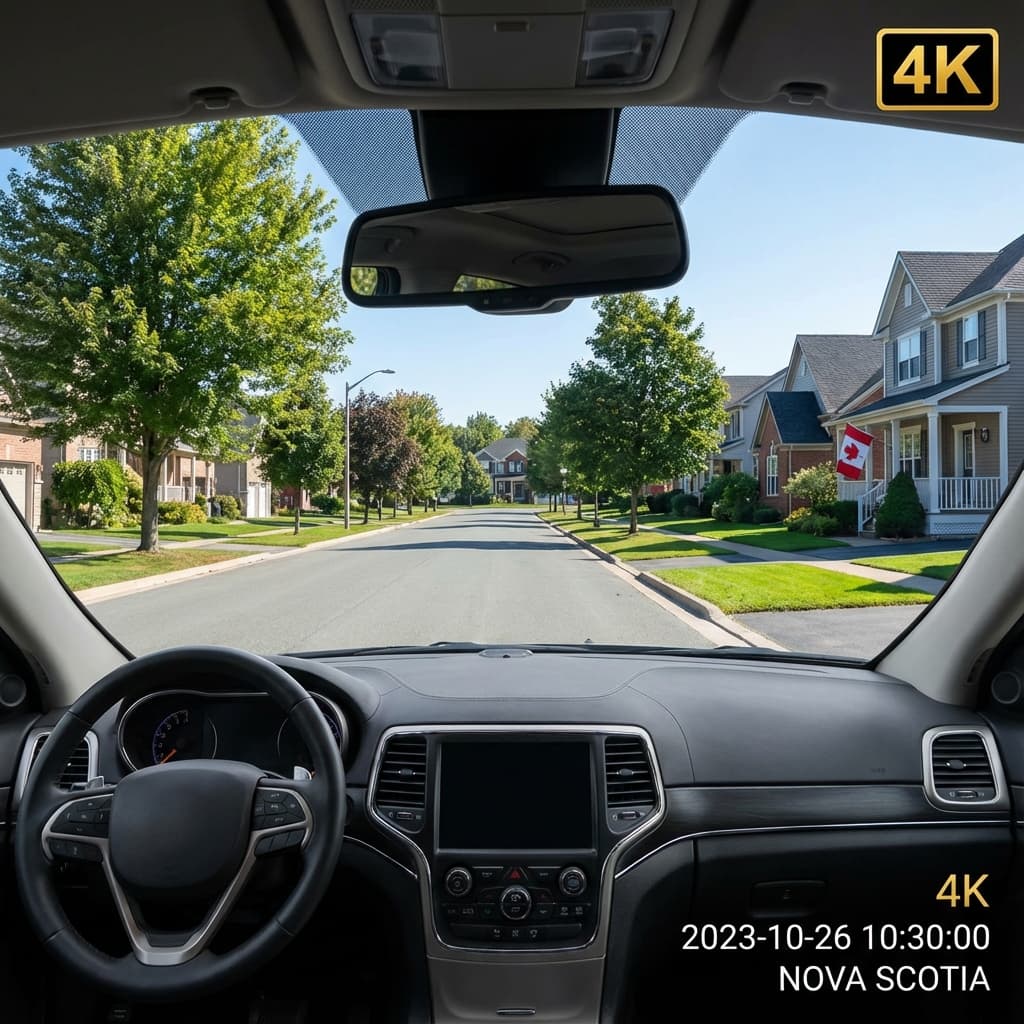
Halifax Road Test: Routes, Tips & Everything You Need to Know (2026)
The road test is the final hurdle between you and your independence. After months of practice, written tests, and supervised driving, this 20-30 minute evaluation determines whether you get your license or have to try again.
If you're testing in the Halifax Regional Municipality, you have options: Halifax (Mount Hope), Sackville, or Dartmouth. Each location has unique characteristics, route patterns, and challenges that can significantly affect your test experience.
This comprehensive guide covers everything you need to know about Halifax-area road tests—from choosing the right location to understanding what examiners look for and how to pass on your first attempt.
The Three Test Locations: Quick Comparison
| Factor | Halifax (Mount Hope) | Sackville | Dartmouth (Baker Drive) |
|---|---|---|---|
| Traffic Intensity | High | Moderate | Moderate |
| Highway Component | 100-series (busy) | 101 (easier) | 111 (moderate) |
| Rotaries/Circles | Several complex ones | Fewer | Multiple |
| Route Predictability | Moderate | High | Moderate |
| Parking Difficulty | Challenging | Easier | Moderate |
| Wait Times | Often longer | Typically shorter | Moderate |
| Best For | Confident city drivers | First-time testers | Dartmouth residents |
Bottom line: Where you live matters, but where you feel comfortable matters more. Many students who fail in Halifax pass in Sackville simply because the environment feels less overwhelming.
For a detailed Sackville route walkthrough, see our Sackville Road Test Drive Guide. For a strategic comparison, check out Halifax vs. Sackville Road Test.
Halifax (Mount Hope) Road Test
Location: 47 Scarfe Court, Halifax (Mount Hope area)
What to Expect
The Mount Hope test location serves central Halifax and surrounding areas. The routes typically include a mix of residential streets, multi-lane commercial roads, and 100-series highway merging.
Common Route Areas:
- Residential zones near Mount Hope for basic driving skills
- Multi-lane roads with complex intersections
- Highway 111 or 102 access for merging evaluation
- Commercial areas with parking lots and business traffic
Key Challenges
1. High-Speed Highway Merges
The on-ramps near Mount Hope often require confident acceleration and quick decision-making. The traffic moves fast, and merge lanes can be short.
What examiners watch for:
- Accelerating to match highway speed (100+ km/h) on the ramp
- Smooth shoulder checks without swerving
- Choosing appropriate gaps in traffic
- Merging without hesitation (which creates danger)
💡 Tip: If you're uncomfortable with highway speeds, practice these specific on-ramps multiple times with your supervisor or instructor before test day.
2. Complex Multi-Lane Intersections
Halifax has numerous intersections with dedicated turn lanes, multiple traffic signals, and heavy pedestrian traffic.
Common mistakes:
- Wrong lane selection before turning
- Not yielding to pedestrians in crosswalks
- Turning into the wrong lane (must turn into nearest lane)
- Confusion with advanced green lights
3. Urban Traffic Density
During peak hours, Halifax traffic can be aggressive. Taxis, buses, and impatient drivers create a stressful environment.
How to manage it:
- Maintain composure even if someone honks
- Don't rush at yellow lights—examiners want to see good judgment
- Keep proper following distance even when others tailgate you
Who Should Test at Mount Hope?
You're a good candidate for Halifax if:
- You live in central Halifax and know the roads well
- You've practiced extensively in city traffic
- Highway merging doesn't intimidate you
- You prefer testing where you'll actually drive daily
Sackville Road Test
Location: Access Nova Scotia, 425 Beaver Bank Road, Lower Sackville
What to Expect
The Sackville test is generally considered more approachable than Halifax, with a higher proportion of residential and suburban driving.
Common Route Areas:
- Residential loops (Stokil Drive, Pine Hill areas)
- Sackville Drive commercial corridor
- Highway 101 access for highway skills
- Quiet side streets for parking maneuvers
Key Challenges
1. School Zones
Sackville has many schools, and the speed limit in school zones is strictly enforced.
The rule:
- 30 km/h maximum when children are present
- "Children present" means any time you see kids outside, regardless of school hours
- Speeding in a school zone = automatic fail
💡 Tip: Drive the routes during school hours at least once to identify every school zone sign.
2. The Sackville Drive Center Turn Lane
This multi-lane commercial road tests your lane discipline.
What examiners watch for:
- Proper use of center turning lane (enter fully, don't block travel lane)
- Signal timing (at least 3 seconds before moving)
- Awareness of vehicles pulling from business driveways
- Staying in your lane through curves
3. Residential Observation Skills
Much of the test happens on quiet streets. Don't let your guard down.
Watch for:
- Kids on bikes or playing near streets
- Parked cars (someone might open a door)
- Uncontrolled intersections (no stop signs)
- Pets or wildlife
Who Should Test at Sackville?
You're a good candidate for Sackville if:
- You're a first-time tester
- You prefer quieter residential environments
- Highway merging makes you nervous (101 is more forgiving)
- You've failed in Halifax and want a different environment
For a detailed route walkthrough, see our Sackville Road Test Drive Guide.
Dartmouth (Baker Drive) Road Test
Location: Access Nova Scotia, 100 Baker Drive, Dartmouth
What to Expect
The Dartmouth test strikes a middle ground between Halifax's intensity and Sackville's calm.
Common Route Areas:
- Portland Street for multi-lane driving
- Woodlawn Road school zones and residential
- Highway 111 for merging skills
- Dartmouth Crossing area for commercial navigation
Key Challenges
1. Rotaries (Traffic Circles)
Dartmouth has several rotaries that confuse even experienced drivers.
The golden rules:
- Yield to traffic already in the circle
- Signal when exiting (not when entering)
- Don't stop inside the rotary
- Choose your lane before entering
2. Highway 111 Merges
Some on-ramps on the 111 are shorter than ideal, requiring confident acceleration.
Critical points:
- Use the full length of the ramp to accelerate
- Match traffic speed before merging
- Don't creep onto the highway at 60 km/h
3. School Zone Awareness
Like Sackville, Dartmouth has numerous schools. The 30 km/h rule applies.
Who Should Test at Dartmouth?
You're a good candidate for Dartmouth if:
- You live in Dartmouth, Cole Harbour, or Eastern Passage
- You've practiced the local rotaries
- You want moderate challenge (not too easy, not overwhelming)
- You're comfortable with Highway 111
For more on Dartmouth testing, see our Dartmouth Driving School Guide.
What Examiners Actually Look For
Regardless of location, examiners evaluate the same core competencies. Understanding what they're watching helps you pass.
Critical Skills That Determine Pass/Fail
1. Observation (Scanning)
Examiners want to see your head move. They need visual confirmation that you're checking:
- Rearview mirror (every 5-8 seconds)
- Side mirrors before lane changes
- Blind spots (shoulder checks)
- Intersections (left-center-right-left)
Common failure: Relying only on mirrors without shoulder checks.
2. Speed Control
You must drive at appropriate speeds for conditions.
What examiners watch:
- Matching posted limits (not 10 under, not 5 over)
- Slowing for hazards (school zones, construction, pedestrians)
- Maintaining consistent speed (not speeding up and slowing down randomly)
Common failure: Driving too slowly with no hazard present (impeding traffic).
3. Space Management
Crashes happen when space disappears. Good drivers create space buffers.
The 2-second following rule:
- Pick a fixed object (sign, pole, tree)
- When the car ahead passes it, count "one-thousand-one, one-thousand-two"
- You should reach that object no sooner than 2 seconds later
Common failure: Following too closely (tailgating).
4. Right-of-Way Decisions
Knowing who goes first prevents collisions.
Key scenarios:
- Uncontrolled intersections: yield to traffic on your right
- Stop signs: first to arrive goes first; if simultaneous, right has priority
- Pedestrians: always yield at crosswalks (marked or unmarked)
- Emergency vehicles: pull right and stop
Common failure: Hesitating when you have right-of-way (creating confusion).
5. Signaling
Signals communicate your intentions. Use them religiously.
When to signal:
- Lane changes (signal 3-5 seconds before)
- Turns (at least 30 meters before intersection)
- Pulling away from curb
- Entering/exiting parking lots
Common failure: Late signaling or no signal at all.
The Parking Maneuvers
You'll be asked to demonstrate two types of parking.
Reverse Parking (Backing into a Space)
Usually done at the end of the test, back at the Access NS parking lot.
Step-by-step:
- Drive past the target space
- Stop when your side mirror aligns with the far edge of the space
- Check all around (360-degree scan)
- Put car in reverse
- Turn wheel fully toward the space
- Back slowly, watching mirrors
- Straighten when centered
- Adjust if needed (it's okay to pull forward and re-adjust)
What fails you:
- Hitting the curb
- Hitting another car
- Not checking surroundings before backing
- Staring at backup camera instead of using mirrors
💡 Tip: You don't need to nail it in one motion. Examiners prefer safe, controlled adjustments over risky single attempts.
Roadside Parking (Uphill/Downhill)
Tests your understanding of wheel positioning.
Uphill with curb:
- Turn wheels LEFT (away from curb)
- If brakes fail, car rolls back into curb and stops
Downhill (or uphill without curb):
- Turn wheels RIGHT (toward curb)
- If brakes fail, curb stops the car
Always: Set parking brake, put in Park.
Common Reasons People Fail
Based on our experience preparing hundreds of students, here are the most common test failures:
1. Rolling Stops
The trap: You slow down at a stop sign but never fully stop.
The fix: Come to a complete stop. You should feel the car "settle" as weight shifts forward. Count "one, two" before proceeding.
2. Missing Shoulder Checks
The trap: You check mirrors but don't physically turn your head.
The fix: Make it obvious. Turn your head so the examiner can see you checking the blind spot. If you have long hair or a hood, make the movement exaggerated.
3. Speed Limit Violations
The trap: Driving 45 in a 50 zone or 55 in a 50 zone.
The fix: Watch your speedometer. It's okay to glance at it every few seconds. Match posted limits exactly.
4. Improper Lane Selection
The trap: Turning left from the right lane, or turning into the far lane instead of the nearest lane.
The fix:
- Left turn → leftmost lane before turn → leftmost lane after turn
- Right turn → rightmost lane before turn → rightmost lane after turn
5. Not Yielding to Pedestrians
The trap: Proceeding through a turn while a pedestrian is in the crosswalk.
The fix: Stop completely until ALL pedestrians clear your path. Even if they're on the far side of the crosswalk.
Test Day Checklist
What to Bring
Required documents:
- Current Learner's License (Class 7)
- Proof of passed written test (if applicable)
- Valid vehicle insurance and registration (if using your own car)
- Payment for test fee
If using your own vehicle:
- Ensure all lights work (brake, signals, headlights)
- Check tire condition and pressure
- Verify inspection sticker is current
- Remove any warning lights on dashboard
- Clean windows and mirrors for visibility
💡 Tip: Using a driving school car eliminates vehicle inspection risk. Many students fail before the test even starts because a brake light is out.
What to Wear
- Shoes: Flat, closed-toe shoes with good pedal feel (no flip-flops, no heels)
- Clothing: Comfortable, non-restrictive (you need to turn your head freely for shoulder checks)
- Avoid: Hoodies that limit peripheral vision
Mental Preparation
The night before:
- Get 8+ hours of sleep
- Avoid late-night cramming or practice
- Visualize yourself succeeding
Test day morning:
- Eat a light, healthy breakfast
- Arrive 15 minutes early
- Use the restroom before the test
- Take 5 deep breaths before starting
What If You Fail?
First, know that many excellent drivers fail their first attempt. It's common, and it doesn't mean you're a bad driver.
Understanding Your Debrief
The examiner will provide a written report showing:
- Which skills you performed well
- Which skills need improvement
- Specific errors that led to failure
Focus areas for next time:
- Address the specific weaknesses identified
- Book additional lessons targeting those skills
- Practice the exact routes where you struggled
When to Rebook
Most students benefit from waiting at least 1-2 weeks before retesting. This gives time to:
- Book focused lessons on weak areas
- Practice problem skills extensively
- Rebuild confidence without rushing
Our Road Test Prep Package includes:
- Pre-test route practice
- Targeted skill work based on previous failures
- Use of our vehicle for the test
- Pickup/dropoff service
Strategic Advantages: Road Test Prep Lessons
Many students ask: "Is a road test prep lesson worth it?"
The answer depends on your confidence level, but here's what it provides:
Route Familiarity:
- Warm up for 60-90 minutes on local roads and traffic conditions commonly used for road testing
- Practise the kinds of intersections and manoeuvres examiners commonly ask for
- Build muscle memory for the specific environment
Vehicle Comfort:
- Use the same car for practice and testing
- Understand its turning radius, braking feel, and visibility
- Eliminate the "unfamiliar car" anxiety
Last-Minute Coaching:
- Address nervous habits that creep up under pressure
- Get reminders about critical errors to avoid
- Start your test calm and confident instead of anxious
If your test is still weeks away, regular in-car driving lessons are the better use of the money — a prep session polishes habits you already have, it does not build them from scratch.
Confidence on the Day: Students who take our road test prep package arrive warmed up, familiar with the local driving environment, and less anxious — the conditions that make a first-time pass more likely.
After You Pass: Next Steps
Congratulations! You've earned your Class 5N license. Here's what comes next:
Understanding Class 5N Restrictions
You can now drive alone, but with limitations:
- Zero alcohol tolerance (0.00% BAC)
- No driving midnight-5 AM (except work/school with exemption)
- Must display "N" on rear of vehicle in some jurisdictions
- Minimum 2 years before advancing to Class 5R
Advancing to Full Class 5
After 2 years with your 5N license:
- If you took the full 35-hour BDE course originally, you automatically advance to Class 5R (no further course needed)
- If you didn't take BDE, you must complete a Defensive Driving course to remove the "N"
Insurance Discounts
Call your insurance company immediately:
- Show them your license
- Confirm you've completed BDE (if applicable)
- Activate your new driver discount (typically 10-25%)
For more on the full licensing process, see our Complete Guide to Getting Your Driver's License in Nova Scotia.
Ready to Ace Your Road Test?
The road test is challenging, but with proper preparation, you can pass on your first attempt. Understanding the test locations, what examiners look for, and how to avoid common mistakes gives you a massive advantage.
At First Lake Sackville Driving Academy, we've helped hundreds of students pass their road tests across all Halifax-area locations. We know the routes, the examiners' expectations, and exactly how to prepare you for success.
Resources to help you prepare:
- Book Road Test Prep Lesson - Route practice + test-day vehicle
- View Driving Packages - Full BDE courses and hourly lessons
- Sackville Road Test Route Guide - Detailed walkthrough
- Halifax vs. Sackville Comparison - Strategic location analysis
You've got this. See you on the road!
First Lake Sackville Driving Academy
Professional Driving Instruction