Dartmouth Road Test Route: Baker Drive Guide & Tips (2026)
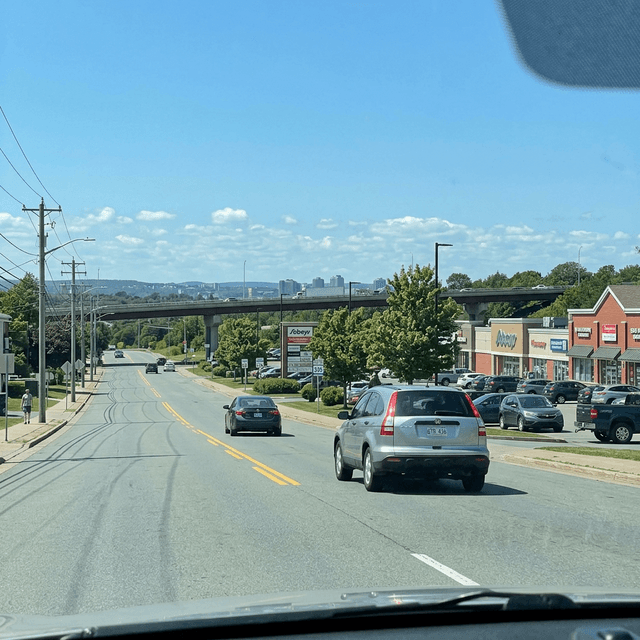
The Dartmouth road test at Baker Drive is one of three testing locations in the Halifax Regional Municipality. While many students default to Halifax or Sackville out of sheer habit or lack of awareness, Dartmouth has its own distinct advantages — especially if you live in Dartmouth, Cole Harbour, or Eastern Passage. Taking your road test dartmouth nova scotia style means dealing with specific combinations of residential streets, multi-lane commercial roadways, and a prominent highway segment that commands respect.
If you are preparing for your license and have booked (or are considering booking) your assessment at the Dartmouth Access Nova Scotia road test center, you've come to the right place. In this comprehensive, deep-dive guide, we will break down every single component of the dartmouth road test route. We are going straight into the tricky intersections, the complex highway merges on the 111, the dense traffic patterns on Portland Street, and exactly what the examiners at this specific location are watching closely for.
By the end of this incredibly detailed review, you will know the baker drive road test inside and out, eliminating the anxiety of the unknown and massively increasing your chances of passing on your very first attempt.
The Dartmouth Access Nova Scotia Location
Before we hit the metaphorical roads, let's talk about the origin point of your entire evaluation.
Address & Location Details: The Dartmouth testing center is located at 250 Baker Drive, Suite 134, Dartmouth, Nova Scotia. This is situated directly in the Russell Lake West commercial development area. You will find it nestled among a busy shopping plaza that includes a grocery store, banks, and numerous retail outlets.
What To Expect When You Arrive: When you pull into the Baker Drive plaza for your dartmouth driving test, the very first thing you will notice is the traffic density. Because this is a major commercial hub, the parking lot itself is frequently bustling with pedestrians, shopping carts, and delivery vehicles.
When you arrive, park your vehicle in one of the designated spots near the Access Nova Scotia entrance, or in a spot that allows you easy egress when the test begins. Head inside with your paperwork—your Class 7 learner's permit, proof of insurance, and vehicle registration.
Once your paperwork is processed and your road test receipt is verified, you will be instructed to wait in your car.
If you have not booked the test yet, appointments at Baker Drive go through Access Nova Scotia — our road test booking guide walks through the steps and what to have ready.
Pre-Test Vehicle Inspection: Before you ever put the car in drive, the examiner will conduct a mandatory vehicle safety check. They will ask you to:
- Honk your horn.
- Turn on your left and right turn signals (front and back).
- Tap your brake pedal so they can verify the brake lights are fully functional.
- Show that your windshield is free of massive cracks and your wipers work.
Instructor Tip: Do not let a burnt-out bulb fail you before the test even starts. Check your entire vehicle the day before your test. Or better yet, book a professional Road Test Prep Package and use a beautifully maintained, dual-brake equipped driving school car guaranteeing no mechanical disqualifications.
Quick Comparison: Halifax vs. Sackville vs. Dartmouth
If you are still on the fence about whether to take your test in Dartmouth, let's look at how it directly compares to the other two HRM locations. (For a deep dive into Halifax, see our Halifax Road Test Guide and for Sackville, check out our Sackville Road Test Drive Guide).
| Factor | Dartmouth (Baker Drive) | Halifax (Mount Hope) | Sackville (Beaver Bank) |
|---|---|---|---|
| Traffic Intensity | Moderate to High | High | Moderate |
| Highway Component | Highway 111 (Moderate/Aggressive) | 100-series (High Speed/Busy) | Highway 101 (Easier merging) |
| Parking Difficulty | Moderate | Challenging | Easier |
| Wait Times | Moderate | Often longer | Typically shorter |
| Key Challenges | Rotaries, 111 Highway Merges | Multi-lane urban intersections | School zones, hidden stops |
| Best For Whom | Dartmouth/Cole Harbour residents | Confident city drivers | First-time testers |
As you can see, the dartmouth road test route strikes a balance. It is not quite as intense as the downtown Halifax core, but the highway merging on the 111 and the presence of rotary elements make it more technically demanding than Sackville's suburban-heavy routes. For a more strategic breakdown of location choices, review our Halifax vs Sackville Comparison.
The Dartmouth Route Breakdown: Area by Area
The exact route you will take during your dartmouth driving test is completely determined by the examiner on the day of your test. There is no single "official route" that you can perfectly memorize. However, examiners use a specific set of roads directly surrounding Baker Drive to test all required provincial competencies.
Here is a microscopic breakdown of the zones you will almost certainly encounter.
1. Leaving the Baker Drive Parking Lot
The test legitimately begins the absolute second you shift into 'Drive' or 'Reverse'.
What is being tested: Leaving a busy commercial parking lot requires incredible observation. Examiners are looking for your ability to manage pedestrians, yield to right-of-way, and perform low-speed maneuvers safely.
Key Challenges: Baker Drive's plaza has multiple pedestrian crosswalks connecting the stores to the parking areas. Furthermore, the exit from the parking lot onto Baker Drive itself can be visually obstructed by large SUVs or delivery trucks.
Instructor Tips:
- The 360 Scan: If you are backing out of a spot, you must physically turn your head to look out the rear window. Staring exclusively at your backup camera is a highly penalized error.
- Stop Lines at the Exit: When exiting the plaza onto Baker Drive, stop completely behind the painted line or sidewalk before creeping forward to get a better view. If you roll over the sidewalk without stopping first, that is an automatic safety violation.
2. The Residential Areas (Russell Lake & Woodlawn)
Once you are successfully out of the plaza, examiners will direct you into the nearby residential neighborhoods. The Russell Lake area features winding roads, occasional hills, and plenty of residential distractions.
What is being tested: This zone is utilized to test your basic vehicle control, speed compliance, scanning for hazards (like kids or pets), and right-of-way rules at uncontrolled intersections or four-way stops.
Key Challenges:
- School Zones: Dartmouth has an incredible number of schools. If you drive past a school zone sign and children are present, the strict absolute legal limit is 30 km/h. If you drive 35 km/h in a school zone with children outside, your test is over. An automatic fail.
- Uncontrolled Intersections: You will likely encounter intersections deep in the residential pockets that lack stop signs or yield signs. You must know to slow down, cover your brake, scan left-center-right, and yield to any vehicle approaching from your right.
Common Mistakes at this Location: Rolling stop signs are the great destroyer of road tests here. You must bring the vehicle to an absolute, unmoving halt. You should literally feel the weight of the car settle backward. Count a full "one-two" before moving.
3. Commercial Driving (Portland Street & Baker Drive)
You cannot complete the dartmouth access nova scotia road test without navigating the heavy multi-lane commercial arteries like Portland Street.
What is being tested: Lane discipline, lane changing in heavy traffic, interpreting advanced green lights, and maintaining the posted 50 km/h speed limit amidst surrounding chaos.
Key Challenges: Portland Street is loud, fast, and packed with cars moving between Dartmouth and Cole Harbour. You will be asked to make lane changes here.
- Traffic Density: The sheer volume of cars means safe gaps for lane changes are smaller.
- Left Turns: Making a left-hand turn across multiple lanes of oncoming traffic onto a side street requires immense patience and judgment.
Instructor Tips: Memorize the MSB technique for every lane change: Mirror, Signal, Blindspot (shoulder check). The signal must come on at least 3-5 seconds before you attempt to move the steering wheel. If the examiner asks you for a lane change and the gap is not safe, maintain your speed, keep the signal active, and calmly say, "I am waiting for a safe gap." They will reward you for good judgment; they will fail you for forcing your way in.
4. Highway 111: The Ultimate Test
This is the section of the dartmouth road test route that induces the most anxiety. The Provincial examiners must ensure you can safely merge onto a 100-series highway.
What is being tested: Accelerating to highway speed, gap judgment, highway lane positioning, and safe exiting.
Key Challenges: The Highway 111 (often referred to as the Circumferential Highway or "The Circ") has some notoriously short on-ramps. Unlike the longer, sweeping ramps on the 102, the ramps near Portland Street and Woodside require you to get up to speed very aggressively.
Step-by-Step Highway Merging for Dartmouth:
- The Curve: As you enter the curved portion of the ramp, maintain a safe, moderate speed.
- The Straightaway: The absolute second the ramp straightens out, you must accelerate commandingly. Do not be gentle. You must attempt to reach the flow of traffic (usually 80-100 km/h depending on the section) before the merge lane ends.
- The Observation: While accelerating, activate your left turn signal, check your rearview, side mirror, and snap a quick look over your left shoulder to identify your gap.
- The Merge: Slide smoothly into the gap. Do not cross the solid white line early; wait for the dashed line.
- The Maintain: Cancel your signal and immediately settle into the center of the lane, maintaining the posted limit.
Common Mistakes: Merging at 65 km/h onto a highway where traffic is moving at 100 km/h is incredibly dangerous and is frequently grounds for an automatic fail due to impeding traffic or creating a dangerous situation. Be confident. Use the gas pedal.
5. The Mic Mac Rotary Area
While not every single route goes deep enough to hit the main Mic Mac Rotary, many routes will touch roundabout or traffic circle geometries in the Dartmouth area. This is a defining feature of the dartmouth driving test compared to Sackville.
What is being tested: Yielding correctly, choosing the right lane based on your exit, and signaling out.
The Golden Rules of Dartmouth Rotaries:
- Entering: You must yield to all traffic already circulating inside the rotary. Do not signal left when entering. If you are taking the first exit, signal right on approach.
- Inside: Maintain a safe speed (around 20-30 km/h) and stay dead center in your chosen lane. Never stop inside a rotary to let someone in.
- Exiting: You must activate your right turn signal just after you pass the exit immediately prior to your intended exit.
6. Returning to Access Nova Scotia & Parking
After 20 to 25 minutes of intense focus, you will be directed back to the Baker Drive plaza. Do not relax yet. Many students fail in the last two minutes because they drop their guard.
What is being tested: Your final parking maneuver. You will typically be asked to reverse into a parking space.
Key Challenges: The Access NS parking lot is tighter than average and often full of other learner vehicles.
Instructor Tips: When executing your reverse park:
- Drive slightly past your target space.
- Perform a massive 360-degree visual sweep. Make sure no pedestrians are walking behind your car.
- Put the vehicle in reverse and turn the wheel sharply toward the spot.
- Use your mirrors predominantly, with quick glances at the backup camera for distance checking only.
- If you realize you are misaligned, do not panic. Simply put the car back in Drive, pull forward slightly to correct your angle, and reverse again. Examiners do not deduct points for a safe, controlled correction. They will heavily penalize you for hitting the curb or a line.
Core Competencies: How to Guarantee a Pass
Examiners at the Baker Drive location are evaluating you through a highly standardized provincial point system. Understanding what they prioritize can transform your approach to the dartmouth road test route. Let's look at the absolute non-negotiables.
1. The Power of Observation
Examiners watch your eyes just as much as they watch the road. You cannot have "tunnel vision" locked entirely on the bumper in front of you.
- You must check your rearview mirror every 5 to 8 seconds. This keeps you aware of tailgaters or emergency vehicles.
- You must perform exaggerated left-center-right scans at every single intersection, even when you have a solid green light. This proves you are anticipating red-light runners.
- Shoulder checks must involve physically rotating your head 90 degrees. A mere glance to the side is inadequate and will be marked as a missed blind spot check.
2. Precise Space Management
Crashing is mathematically impossible if you maintain space.
- The 2-Second Rule: Always maintain at least a two-second following distance in city driving, extending to three or four seconds on the 111 Highway. To measure this, pick a fixed object (like a light pole). When the car in front of you passes it, count "one thousand one, one thousand two". If you pass that same pole before you finish counting, you are following too closely and losing points.
- Stopping at Lights: When you stop behind another vehicle at a red light, you must stop far enough back to see where their rear tires physically touch the pavement. If you cannot see their tires, you are jammed up too close.
3. Absolute Speed Discipline
There is a massive misconception that driving 10 km/h under the speed limit makes you look "safer" to the examiner. It absolutely does not. If the speed limit on Portland street is 50 km/h and weather conditions are perfect, driving at 38 km/h demonstrates a severe lack of confidence and impedes the natural flow of traffic. You will lose points.
Conversely, driving 54 km/h in a 50 km/h zone is speeding. Speed limits in Nova Scotia are maximum absolute limits, not gentle suggestions. Your goal is to stick precisely to the posted limit +0 / -3 km/h. Keep scanning speed signs, especially as you transition from Baker Drive onto the residential streets where limits may drop abruptly.
The Deep Dive: How Faults Are Scaled (Minor vs Automatic)
Understanding the difference between a minor deduction and a critical error will completely shift your mindset on test day. Many drivers who fail their baker drive road test do so not because they made a massive mistake, but because they accumulated too many minor errors due to general passivity.
Minor Faults: These are errors that do not immediately endanger anyone but represent imperfect driving habits. Examples include:
- Signaling slightly too late (less than 30 meters from an intersection).
- Taking a turn slightly too wide, but staying completely in your legal lane.
- Hesitating for a brief moment when you clearly have the right of way.
- Taking too many pull-ups to adjust your alignment during reverse parking.
You are allowed to make several of these minor faults and still pass perfectly fine. Do not panic if you bump the curb lightly while parking—adjust, breathe, and continue. One minor fault does not end the test.
Automatic Fails (Critical Errors): These are instances where you create an immediate danger, impede traffic severely, or violate a major law. Examples include:
- The examiner having to physically grab your steering wheel to prevent you from drifting or turning into danger.
- The examiner having to stomp on the passenger-side dual brake (if you are renting a driving school vehicle).
- Running a red light or blowing completely through a stop sign without achieving the zero momentum required.
- Speeding in an active school zone while children are present.
- Dangerously cutting off another vehicle during a highway merge on the 111.
If you commit a critical error, the test is over right then and there. The examiner will usually quietly mark the fail, direct you safely back to the Baker Drive parking lot, and deliver the news when you are parked. Keep your distance from other cars, check those blind spots relentlessly, and you will effectively eliminate 90% of all potential critical errors.
Winter Testing at Baker Drive
If you have booked your dartmouth road test for December, January, or February, testing in Dartmouth takes on an entirely new complexion. Winter driving fundamentally shifts the examiner's expectations.
Adjusting Speed for Conditions: While we explicitly mentioned earlier that you must drive the 50 km/h speed limit when conditions are perfect, winter brings the "conditions rule" into effect. If Portland Street or Baker Drive is covered in unplowed snow or black ice, driving 50 km/h is incredibly dangerous and will fail you. You are expected to lower your speed to a pace that maintains full vehicle control.
Braking Distances: Examiners are watching closely to see if you begin your braking sequences far earlier than you would in July. You must double or triple your standard two-second following distance. When approaching intersections in Dartmouth during winter—especially the bottom of the hills near Russell Lake—assume there is black ice. Glide to the stop sign gently. If your anti-lock brakes (ABS) engage rapidly while trying to halt for a normal stop sign, you approached the intersection far too quickly for the conditions.
Clearing the Vehicle: Before your test begins, your vehicle must be flawlessly cleared of snow. A small patch of snow left on your roof can blind the driver behind you when you merge onto Highway 111. Make sure your wiper fluid is topped up, as the salty spray from the 111 will instantly smear your windshield visibility.
Dartmouth vs. Other Locations: Who Should Test Here?
Are you still wondering if the dartmouth access nova scotia road test is the right choice for you?
You should book your road test in Dartmouth if:
- You live in Dartmouth, Cole Harbour, Eastern Passage, or Preston. Home-field advantage is a real phenomenon. You should test where you practice the most.
- You are highly comfortable with aggressive highway merging. If you can handle the 111, you will shine here.
- You have spent time specifically practicing how to properly navigate multi-lane traffic circles.
You might want to consider Sackville instead if:
- Highway merging terrifies you. The Highway 101 merge in Sackville is vastly longer, flatter, and more forgiving than the 111.
- You prefer quieter, wider residential streets over dense commercial arteries.
- You struggle with complex rotaries. (Our Sackville Road Test Drive Guide covers all this in detail.)
You might want to consider Halifax (Mount Hope) instead if:
- You are an expert at navigating extremely dense, slow-moving urban congestion and one-way streets. (Check out the Halifax Road Test Guide for more).
Ultimately, a good driver should be able to pass safely in any zone. The key is simply knowing what to expect so the environment doesn't surprise you on test day.
Your Ultimate Test Day Checklist
As you approach your test date, follow this timeline to ensure you are mechanically and mentally prepared.
One Week Before:
- Drive the Baker Drive and Woodlawn areas extensively.
- Practice your reverse parking every single day until it becomes completely muscle memory.
- Book a Road Test Prep Session with a certified instructor. Having an expert take you on a mock test around the actual dartmouth road test route will expose your hidden bad habits before the examiner does.
The Night Before:
- Ensure all your documents (Learner's permit, insurance, vehicle registration) are stacked and ready.
- Check every single light on your vehicle.
- Clean your windshield inside and out to maximize your visual scanning capabilities.
- Get eight hours of sleep. Fatigue slows your reaction time exactly when you need to be razor-sharp for hazard perception.
The Morning Of:
- Arrive at the Baker Drive Access Nova Scotia at least 15 to 20 minutes prior to your scheduled appointment.
- Back your vehicle into your parking space upon arrival. Do not pull in forward. Starting your test by having to reverse blindly out of a tight spot while your nerves are at their absolute highest is a terrible strategy. Back in, so you can simply put it in Drive and confidently pull forward when the examiner says, "Okay, let's begin."
- Take deep, regulated breaths. Nervousness is completely normal, but you have put in the hours of practice. You know the rules. Trust your training.
Next Steps: Elevate Your Driving Experience
Passing your dartmouth driving test is completely achievable with the right strategy and preparation. By understanding the specific challenges of Baker Drive, the aggressive merges of the 111, and the unyielding rules of the examiners, you are already vastly ahead of the average test-taker.
Do not leave your license to chance. If you want to absolutely guarantee that your skills are up to the exact provincial standards, we are here to help.
At First Lake Sackville Driving Academy, we have decades of experience preparing students specifically for the rigors of the Halifax Regional Municipality road testing routes.
Here is how we can help you ace your test:
- Need a final polish before the big day? Book our specialized Road Test Prep Package and benefit from expert mock testing and our flawless, test-ready vehicles.
- Need foundational help building confidence on the road? Check out our customized In-Car Lessons.
- Want to know more about the instant-failure mistakes that trip up 50% of new drivers? Read our guide on the Automatic Fails on the Nova Scotia Road Test.
- If you are exploring all options for premier instruction across the bridge, learn more about choosing a Driving School in Dartmouth.
You have put in the time. You have done the studying. Now, go conquer the Baker Drive road test and claim the independence you deserve. Drive safe, constantly check those blind spots, and we'll see you on the road as a fully licensed driver!
First Lake Sackville Driving Academy
Professional Driving Instruction